
Tough Guy: A queer story about queer stories


There’s a story behind every production you see onstage, from the script’s inspiration to the Artists involved, and more!
Tough Guy, by Hayley Moorhouse, kicks off our 2025/26 Fringe Theatre Season. We chatted with playwright and producer, Hayley, about the inspiration behind Tough Guy and the difficult questions it poses around healing and capturing catastrophe with a camera.
If you had to describe Tough Guy in one sentence, what would it be?
Hayley: I think Tough Guy is a story about queer stories and how we tell both the dark and the light of those stories.
Can you tell me a bit about your role in this production?
Hayley: For this production I’m taking on the dual role of playwright and producer!
I’ve been writing this script since late 2022, developing it with various collaborators through the Riser Program at the Common Ground Art Society and in that time it’s gone through about six drafts
And then, as the producer, my role is sort of all the logistical non-artistic parts of the process, so funding and budgets and marketing and sponsors and contracts and getting everybody in the room and settings them up to succeed. In the end all I want my Tough Guy team to think about is the artistic side of things… Producing at this scale has been a huge step forward and a huge learning curve, and I’ve been so lucky to be supported by a lot of mentors on the journey, including the folks here at Fringe, the production’s director, Brett, and people all over the theatre community.
What inspired you to write the story?
Hayley: At first, I was just inspired by the image of a figure on stage, boxing. There was something really interesting to me in portraying something so physical and visceral on stage. I think in the act of boxing there can be so much behind each punch, it can be so violent, but also so cathartic and powerful.
I think too, Tough Guy is grounded in the real world – queer people have seen acts of extreme gun violence at queer nightclubs and in queer spaces and these acts really do hit home. There’s a sort of disturbing bend now, away from 2SLGBTQ+ rights and acceptance, that I think is on everybody’s mind in the queer community. It just feels very top of mind to write a story where those difficulties are really embodied.
And how did the story develop over six drafts? What was that process like?
Hayley: It was always set in the aftermath of a mass shooting at a nightclub, but in the early drafts it dealt with social media, journalists, and everybody outside of this friend group had to say about it. As the drafts went on, I became more curious about the insular life of these friends and how this shooting has impacted their relationships and their history and their understanding of their own position in the world.
That eventually led to me making the documentarian a part of the friend group, because it gives that character and that documentary a lot more ownership and opens up questions in a more interesting way – what is the cost of telling a story; is it worthwhile; what is the documentary ultimately going to give anybody and what’s the purpose it’s serving?
How did you try to creatively strike a balance between grief and celebration while bringing this story to life?
Hayley: I think that’s something that has developed with the different drafts, because the last thing I wanted was for it to be just a relentlessly sad, oppressively awful situation. I don’t think that art evoking just one emotion is powerful, or necessarily honest. I think it turns people away because it’s too much to take in.
So structurally, Tough Guy jumps back and forth between the present day post shooting and flashbacks to a really joyous New Year’s Eve party which is the last time they were all together as a group before the shooting occurred. You get to see these bursts of giddy, hilarious, queer joy in the past, and I’ve really made an effort to try and find pockets of that for the characters in the present timeline as well.
At one point in the play, a character says “Yes, this awful thing happened to us, and that’s true, but also all these wonderful things we’ve experienced together, they also happened, and that’s equally true.” And that’s what it’s all about, I don’t want to shy away from the real, frightening events that queer people face, but in doing that, I also want to acknowledge all the magic and wonder and joy and exuberance that is so palpable within the queer community.
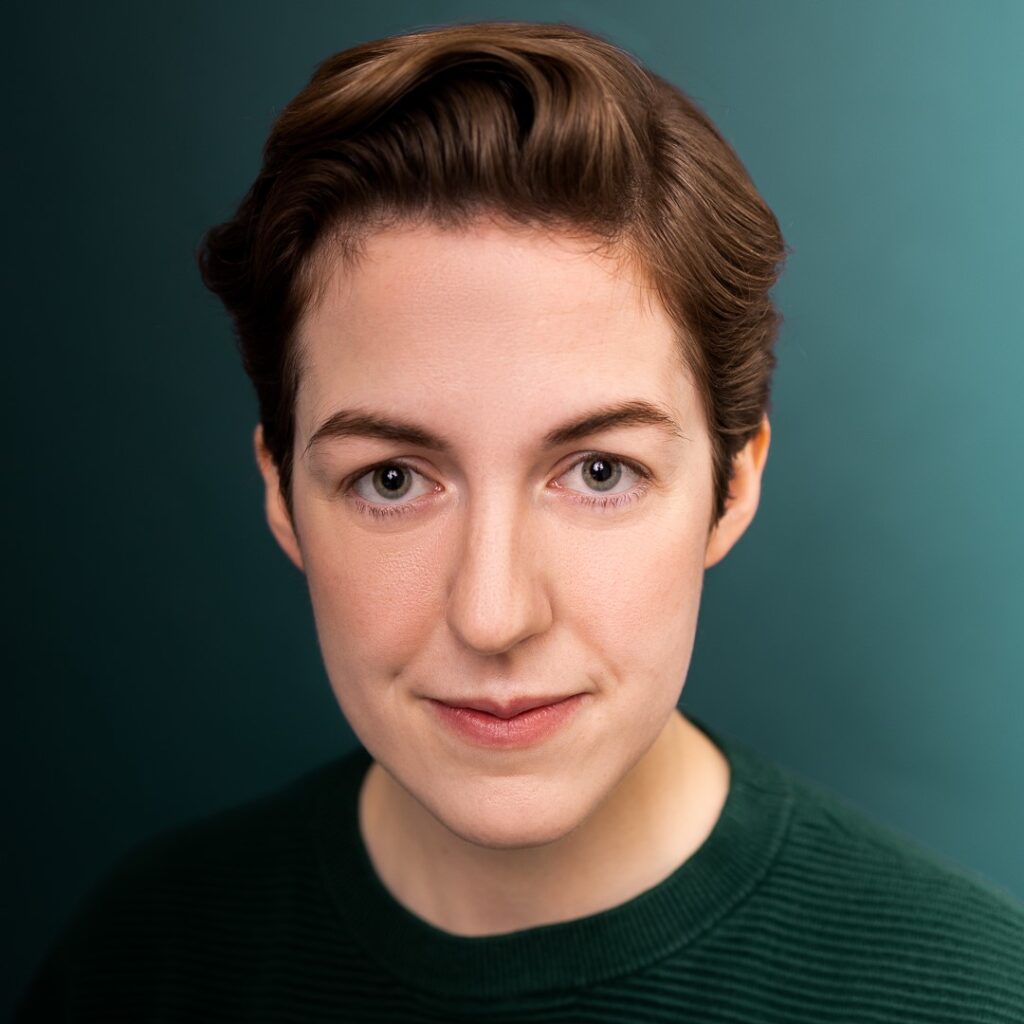
Playwright & Producer
Healing can look different for everyone, it’s not always linear, and it is certainly complicated by ongoing threats of violence. What role does healing play in the story of Tough Guy?
Hayley: I think each of the characters is trying to navigate their healing journey in a different way, and a lot of conflict in the play comes from folks trying to be there for each other in imperfect ways and the fallout from that.
There’s some characters who really shut down and some characters who rush to be the caregiver and some characters who try to put healing in an artistic format by making a documentary. It’s natural to get it wrong and try stuff that doesn’t work for you, so I’ve tried to allow these characters space to flail a bit. There’s no answers on what’s going to work, there’s no guarantees, but what they have is each other. What Tough Guy shows is that, at the root of any healing journey is having a community who is there with you in the messy, complicated, painful process of recovering.
Traumatic experiences can be so isolating because it becomes too painful to be seen and understood when you’re dealing with something so vulnerable, but community can break you out of that isolation, even though you run the risk of being misunderstood or not being treated with care, or whatever it may be, togetherness and that sharing of difficulty is one of the most powerful tools for healing. It may be a little scary, it may require a great deal of trust and courage, but we see these characters fighting that fear in order to reach each other again after this horrible thing isolates them.
There is something particularly resilient about the queer community, how does Tough Guy explore the queer community’s capacity for strength and endurance?
Hayley: Well, I think one thing that everyone in the queer community has in common is that, in order to live truthfully as they are, to honour their sexuality and their gender, it does sort of necessitate a certain level of vulnerability and a certain level of self-understanding. That requires courage and it requires that you know the journey of uncertainty and doubt and confusion and shame and then hopefully self-love and acceptance on the other side.
In one of our early rehearsals, our Director asked an interesting question – what exactly is a tough guy? We came to realize over the course of a few years of development and writing that all of these characters are, in their own ways, the tough guy. They’ve all put up their own shields and their own sort of facades of coping, all these mechanisms to protect themselves.
In some ways, those self protective mechanisms are the seed of resilience. They allow you to keep going day to day. They allow you to get up in the morning and live your life. The journey that the characters go on through the play is shedding those and allowing themselves to be seen by each other and understood and helped by each other. It’s that interesting dynamic of the armour we all put on in order to survive the worst parts of life, and then when we’re through the gauntlet, figuring out how we take that armour off and find true healing.
And I think it is a natural part of going through something as difficult as a shooting to have this period of destabilization and guardedness. You may not want to be in this period forever, but there’s no shame in it either – as long as you’re surviving and getting through the day, then you’re doing what you need to do.
A story about the aftermath of a mass shooting in the queer community is already very nuanced. How does adding the issue of representation deepen or complicate the conversation being had through this play?
Hayley: I think there is something powerful and palpable in our compulsion to tell stories, whether they’re difficult or cheerful or whatever. The way we process the world around us, I think, is to tell stories, and to put it in that framework. For this documentarian character, it is a way of investigating and processing what she’s been through and what her friends have been through.
And it does invite larger questions: What is the purpose of the story? Is it serving anybody? Is it helping anybody to share this? Is it going to change people’s minds? Give them solace? What does this processing and reliving for the sake of storytelling cost for everybody that has to go through it again?
The function of the documentary within the play is to open all of those questions. We don’t really have an answer at the end of the play, but it opens up those questions about responsible, truthful, thorough storytelling.
What do you hope audiences take away from seeing the show?
Hayley: I hope audiences will leave the theatre feeling a stronger sense of togetherness with their community, not only queer audiences, though perhaps especially queer audiences, but everyone. I hope people walk away believing in resilience, feeling hopeful and feeling more tightly connected to their community.
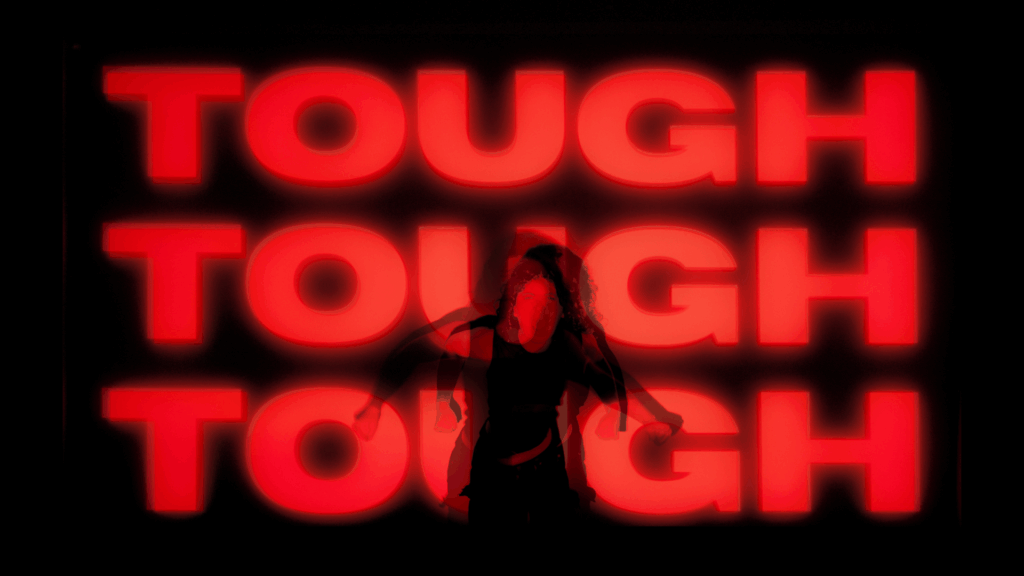
Learn what it means to point a camera at catastrophe. Tough Guy plays October 28 – November 8, in our Backstage Theatre with tickets for only $26!