Get on the Ride: Director Murray Utas on Countries Shaped Like Stars

Tell us about this production of Countries Shaped Like Stars and your role.
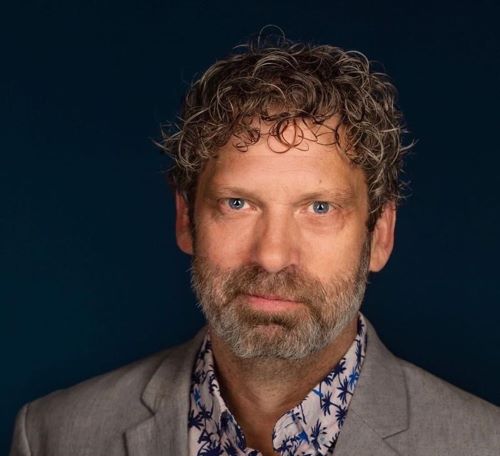
Countries Shaped Like Stars is the kind of play that made me fall in love with theatre all over again. This show (created by Emily Pearlman and Nicolas Di Gaetano) embodies everything that makes the art form magical: the shared experience between performer and audience, the exchange of energy, the feeling that you’re on this ride together. It’s whimsical. It’s exciting. It draws you in. This play captures everything in theatre I adore.
I have the joy of directing this production, and I’m working with two incredibly dynamic performers (Dayna Lea Hoffmann and Michael Watt). It truly feels like an embarrassment of riches. One of the most beautiful things about this play is that all the elements you might normally assign to designers (sound, atmosphere, moments of transformation) are created live by the actors, right in front of you. And at times, the audience becomes part of that creation too. Its charm is in its simplicity, and I can’t wait to see these performers breathe it in and share it with audiences.
As a director, my role is to clear the path for performers, to help remove whatever might be in their way so they can surprise themselves and their audiences. It’s about creating space for them to discover what they’re capable of, perhaps even things they never imagined they could do. And witnessing that discovery, alongside an audience, is truly the heart of this production for me.

Photography by Jenica Thompson
Director
Tell us about when you first saw this play and why you think audiences will relate to it now.
I went to see Countries Shaped Like Stars in a church basement at our 2013 Edmonton International Fringe Theatre Festival as part of our Bring Your Own Venue Program.
Picture it: uncomfortable wooden chairs, two performers stationed in opposite corners, and a set that looked like they had literally pulled stuff out of their own garage and out of their living room. I sat down thinking: “Okay…what’s going to happen here?”
Then the show started, and two performers transformed the space and us. We transcended from that uncomfortable wood chair as they created storms, wind, and entire worlds! No tech tricks, no fancy lights, nothing but sheer theatrical imagination. In front of us in the audience sat a father and his daughter, maybe seven or eight years old. At the height of the action, she was gripping her dad in terror and delight. And my friend Liz sitting next to me latched onto my arm exactly the same way. That’s when I thought: “now, this is Fringe!” This is pure storytelling. This is magic.
I think great theatre doesn’t lecture. It doesn’t preach. It invites you in. Countries Shaped Like Stars is pure invitation. If you want to come and be thoroughly entertained and moved at the same time, this is the play for you. It sweeps you up and takes you somewhere otherworldly. It’s whimsical, imaginative, and completely timeless. Not set in any particular era, not tied to any trend, not something that ages. It simply asks you to believe, to give yourself over, to go on the ride.
And honestly, whether you’re seven or seventy, that invitation is irresistible. This play won’t even give you the option to stay on the sidelines; you’ll just go. And it will feel like a gift.
Director
Can you tell us a little bit about the creative team you’ve assembled to bring this show to life?
What I’m most excited to explore with this team is their shared spirit: playful, curious, generous, and utterly devoted to making magic. This show demands imagination, physicality, musicality, and a willingness to leap. I can’t wait to see how high we go together.
Nicole Maloney is our assistant director. I’m very excited. Nicole directed Lauren Brady’s SWAN? (part of our 2024 Holdover Series), and I remember being struck by Lauren’s dynamic performance and by Nicole’s instincts as a director. They also worked with Watt and Walters on Let’s Not Turn on Each Other, which was also part of our Holdover Series that same year.
I want to offer Nicole access to the full machinery of producing within an organization, not just the rehearsal hall. That means production meetings, season planning conversations, Development, Marketing, Front of House. Everything that goes into making a piece of theatre. They are excited about that.
I don’t think there’s a show in the city this season that Michael Watt’s not somehow involved in. The secret is out: this human being is so talented. They’re kind, joyful, and musically gifted. Everything this show needs. Michael’s character Bartholomew plays mandolin, sings, and handles complex harmonies. I knew Michael had the musicianship; I’d seen them perform a song in Let’s Not Turn on Each Other that absolutely blew my mind. The day after I offered this part to Michael, they went out and bought a mandolin. I’m willing to bet they already know every piece of music in the show…and have probably written a few extras for fun.
And then there’s Dayna Lea Hoffmann. From the first moment I met Dayna, I knew they were a special performer. I’ve worked with Dayna in their capacity as an incredible arts administrator, but when Countries came along, the timing finally aligned to work with them as a performer. Dayna’s circus training, their physical vocabulary, their presence, and their acting chops – all of that fits the style of this show perfectly. I’m thrilled to uplift and showcase Dayna in a role that asks for everything they’ve got. Everybody knows they’re killer, and they’re talented, but I think this production will reveal something new. A level and dimension in Dayna’s work that audiences haven’t seen yet.
Rounding out the team are some truly exceptional collaborators behind the scenes. Our production designer, Even Gilchrist, is an incredible designer whose work I love. He has been a fan of this play too, since way back when he first saw the show out East. Sarah Austin, our stage manager, also arrived as a gift and essential part of the process. Plus, she’s just so kind and talented. And Jadey Capaldo, our lighting operator, is one of our resident technicians at Fringe. So they know this place inside and out. They are also such a wonderful human. This is a team that is knowledgeable, creative, supportive, and ready to play. We’re so excited to get started and build something special together.

What do the music and the musicality of the words add to the storytelling?
This play simply doesn’t work unless its rhythm is constant and alive. When you listen to a band, you can’t always explain what pulls you to get up to dance, but so much of that “tractor beam” comes from the rhythm section. Theatre has its own rhythm; it has to flow; it has a rise and fall; it moves like a piece of music.
I tend to think in progressions. We lift you up one step, then we take another step up. Turn the dial one notch higher. We don’t return to the previous baseline; that new height becomes the baseline. Throughout the play, that build continues toward the climax. Even when we descend afterward, the floor is higher than where we started.
With music, with rhythm, with something that compels you to stay invested, you can forget the outside world for an hour. As an audience member, you’ve been changed. That’s what I love most about theatre: the instant connection it creates.
It’s hard to describe, but this is how I’ve often explained it. You see a good show, you clap, you leave, and by the time you reach the door, you’re already thinking about your grocery list, turning your phone back on, heading home. But then there are those other shows. The ones where, two weeks later, you’re doing the dishes and suddenly stop because it hits you again. Wow. It’s still with you. It resonates in a way that’s both communal and very individual.
We can’t make a show that is everything for everyone, but we can make something that feels alive. And without rhythm, you don’t get that. With too many full blackouts, for example, you lose the audience. Each time the lights drop, it’s harder to get them back. Eventually you’re relying on flashy tricks just to re-capture their attention. I want to take you with us, give you just enough air to breathe, and then keep doing that over and over again. For me, theatre is a well-crafted piece of music. Every person in the theatre plays a role in that score, including the audience. And this play, in particular, invites them to be more than silent witnesses. They’re part of the music.
Director
How will audiences be taken into the story?
When you come to the show, you’ll be welcomed in. Truly seen. As if we’re all boarding to take the ride together. We invite you in every step of the way. And it won’t take long before you’ll want to be a part of it.
People often ask about the difference between theatre and storytelling. They are definitely related, they’re siblings, there’s no doubt about it, but in storytelling, especially in devised or collective creation work, the narrator becomes your guide. Audiences want to know the rules: Who’s taking me on this ride? What do I need to know? What am I meant to do?
What’s so beautiful about this play is that the narrator isn’t just one tone, one style, or even one point of view. Sometimes the narrator is right there with you in the audience, commenting on what we’re all experiencing. Sometimes they pull you into the story. And there’s always that wonderful, unspoken wink – that glint in their eye that says: “I know something you don’t know.” That’s what makes the hair on your arm stand up.
Expect to be on the edge of your seat. No one will force you to do anything, we promise, but you will be invited to play small parts in the story if you want to. Nothing is mandatory; everything is an opportunity. Even a simple nod can become part of the fun.
What’s especially magical is how precise the play’s imagination is. The simplest actions have such a profound impact. You’ll find yourself amazed that a moment was created with nothing more than a person, a tin can, and some rocks. Everything becomes an instrument – voices, bodies, objects. Your voice can be the wind; your hands can become percussion. The show reminds us how essential play is to our well-being. You want to relieve stress? Play the way you did as a kid. This piece is pure J-O-Y. All caps, with a dun, dun, dun, and a bunch of emojis to follow.
And if you want to get a little nerdy…this kind of storytelling embraces the nature of Fringe and the constraints of a Festival show. No elaborate set, no expensive shipping, only fifteen minutes to load in and out of the theatre. What’s left when it’s all stripped away? The story, the imagination, the voice, the body, and the audience.
When you come to the theatre, bring your willingness to suspend disbelief. Let your imagination run wild. And even if you think that you’re coming in and you still haven’t shed the weight of your day, the imagination of this play is going to take you away anyways. It’s impossible not to be pulled in.

What is it that makes Gwendolyn and Bartholomew’s love so special?
We seem to be in a world where everything is expected to happen in an instant, right? Instant gratification, instant responses, and instant validation. We chase likes, impressions, and all kinds of artificial substitutes for real connection.
This play strips all of that away. It reaches back to something organic, something that exists in us regardless of who we are, regardless of our politics, our beliefs, our identities. We all know what love feels like. No one has to define it for us; it’s universal and instinctive.
That’s the kind of love these two characters share. From the moment they meet, it isn’t about analyzing red flags or deciding whether there should be a second date. It’s simple. I see you. You see me. And I want to share my world with you. In that first instant, the foundation is already laid, and everything that follows builds upward from there. It’s rare, because attraction is one thing, but a love that begins even before attraction? That’s pretty special.
What makes their love so powerful is its purity and its immediacy – but also its humanity. Gwendolyn and Bartholomew aren’t ideals or fairy tale versions of lovers. They’re real people, carrying their own histories, habits, blind spots, and fears. Their connection is deeply felt, but it still has to move through the messiness of being human, of learning how (and whether) two imperfect worlds can fully align.
I think the audience can open themselves up to possibilities they may have quietly closed the door on. Maybe you’ve thought: “I’ll never meet someone like that again,” or “that friendship will never be repaired.” This play whispers back: “maybe nothing is final.” And honestly, who doesn’t want to believe that?
Director
This play brings together two people with opposing viewpoints in an unexpected way. What do you think it reveals about how we might bridge divides in day-to-day life?
I think this play can show a middle ground for humanity. Somewhere along the way, we’ve been pushed toward anger. We’ve forgotten that differing viewpoints aren’t a threat; they’re an opportunity. You don’t have to agree with someone to treat them with kindness.
This story shows two people from very different worlds who still find connection, understanding, and even love. They aren’t “opposing forces” necessarily; they’re simply individuals learning to listen, to see each other, and to meet in the space between.
Today, differences are treated like battle lines, when in reality, disagreement is just part of being human. At our core, we aren’t our anger or our fear. We’re our capacity for compassion. I genuinely believe love wins, and theatre can help remind us of that, one soul at a time.
This play captures the power of two people who don’t overthink that divide between them. They walk toward each other. In doing so, they carve a path through terrain others might find impassable. They show us that bridges are possible, even between places that seem worlds apart.
In geography terms, it’s like an ecotone. The space where two distinct ecosystems meet and something new emerges. That’s what happens between these characters. They’re not star-crossed like Romeo and Juliet. It’s not two warring houses, not about hate. Just two separate landscapes that somehow find a way to connect. And in that meeting point, something beautiful and transformative happens.
Tell us about your role as a mentor on this project
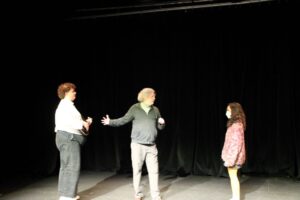
When I graduated theatre school at Red Deer college, I made the decision to jump straight into the profession instead of pursuing more years of training. I knew it would be a tougher road, but once I got out there, I was incredibly lucky. So many Artists stepped in to guide me without me ever having to ask. They mentored me simply because that’s what our community does. And all they ever said in return was: “Now that you’ve received this, turn around and give it away.”
That philosophy has stayed with me. I’m here as a teammate. We work in a circle, not a hierarchy. When you empower others, you erase doubt. Doubt is the enemy of performance. Artists need to feel safe enough to try anything, knowing that if they trip we’ll be there to catch them and lift them back up again. No one becomes great on the first attempt; they grow because someone encourages them to keep going.
I hope this team walks away from this experience with the confidence to take risks, the permission to explore, and the belief that they, too, can “give it away.” That generosity, passing on what’s been given to you, is what keeps our art form alive and beautiful.
Countries Shaped Like Stars
February 17 – 28, 2026
$26 and Offer What You Will tickets on sale now!